

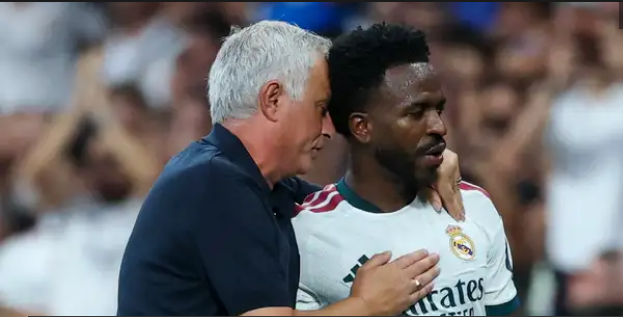
Barcelona and Real Madrid rarely meet as ordinary opponents. Their rivalry carries the weight of regional identity, sporting history, and years of competition for Spain’s greatest honors. A Clásico can therefore shape the mood around both clubs well beyond the final table: it is also a public test of authority, composure, and ambition. During José Mourinho’s period as Real Madrid coach, that intensity became especially pronounced. This is a historical look at that era, not a preview of a current fixture such as a Barcelona vs Real Madrid 2026 match.
The points at stake may be measurable, but the consequences can feel broader. A victory could shift momentum in the title race, strengthen belief within a squad, and increase pressure on a direct rival. A defeat, by contrast, might leave players and supporters questioning whether their side can meet the season’s biggest challenges. Even a draw could be interpreted differently depending on the teams’ form and position. That is why an el clásico match preview must consider more than tactics or likely lineups: the fixture’s timing and psychological impact matter too.
For Mourinho, every meeting with Barcelona also invited judgment of his methods and leadership. His approach at Real Madrid was closely scrutinized, and the Clásico offered a conspicuous stage on which to defend it. The same scrutiny applied to Barcelona’s coach, whose decisions were measured against the expectation of controlling a rivalry-defining contest. Team news, selection choices, and tactical adjustments could all become part of a wider debate about each manager’s competence. In that setting, the match was not simply another opportunity to collect points; it could influence confidence, shape the title narrative, and color public perceptions of both coaches. The pressure surrounding Mourinho’s Real Madrid and Barcelona made each encounter feel consequential, even without assuming a particular date, score, or competition.
Preparing for a high-stakes Clásico would require José Mourinho to solve a familiar tactical tension: how to protect the team from Barcelona’s possession without surrendering the initiative. A compact defensive shape can limit space between the lines and make central combinations harder, but defending deep for long periods may invite pressure and leave forwards isolated. A practical plan would therefore need clear roles, disciplined distances between units, and moments when the team can advance together. In an el clásico match preview, this balance is central: defensive security matters, but so does presenting a credible threat.
Against a side capable of circulating the ball patiently, Madrid would need to stay alert to changes of tempo, runners moving beyond the defensive line, and overloads around the flanks. Mourinho’s approach has often emphasized organization and rapid transitions, making the recovery of possession only the beginning of an attack. Players would need to identify when to play forward quickly and when to retain the ball long enough for support to arrive. Those choices can turn a defensive action into a scoring opportunity, while careless passes or rushed clearances may simply return pressure to the defense. These are tactical considerations, not confirmation of any specific preparation or team briefing.
The emotional demands would be another part of the challenge. The noise, rivalry, and consequences associated with Barcelona vs Real Madrid 2026 could test concentration, particularly after a disputed decision, a conceded goal, or an early setback. A composed response would help prevent isolated errors from becoming larger problems. Players would need to manage challenges carefully, communicate consistently, and maintain their responsibilities even when the match becomes stretched. For José Mourinho’s Real Madrid, the broader objective would be to combine resilience with purposeful attacking intent: limit Barcelona’s most dangerous spaces, exploit openings during transitions, and avoid mistakes in areas where they could be punished. Any barcelona vs real madrid team news would shape the available options, but discipline, focus, and efficient decision-making would remain essential foundations for the contest.
Barcelona’s preference for controlled possession can make the opening exchanges a test of Real Madrid’s patience and positioning. Rather than chase the ball continuously, Madrid may look for clear pressing triggers: a heavy touch, a pass toward the touchline, or a receiver facing away from goal. Coordinated pressure at those moments could disrupt Barcelona’s rhythm and create chances to win possession in advanced areas. If the press is mistimed, however, Barcelona’s passing can bypass it and expose space behind the first line.
When Madrid defend deeper, compactness between the back line and midfield becomes crucial. Closing central passing lanes can encourage Barcelona to move the ball wide, where defenders may have more support and a clearer opportunity to contest crosses or second balls. The balance is delicate: retreat too far and Barcelona can build pressure around the penalty area; step forward without cover and a single pass may open a route into space. The team’s available players will shape which approach is practical.
Madrid’s most promising transitions may come from winning the ball and moving forward before Barcelona can reorganize. The first pass after a recovery, and the timing of forward runs, could determine whether a counterattack develops or possession is surrendered. Runs beyond the defense need to be coordinated with the ball carrier’s options, while midfielders must judge when to support the break and when to protect against a counter-counterattack. These details are central to any Barcelona vs Real Madrid 2026 El Clásico match preview, but they cannot be separated from the game state.
Small adjustments may change the contest’s momentum. A coach could alter the height of the press, shift defensive coverage toward a particular channel, or ask a midfielder to arrive later in attack. Such choices depend on the players available, the score, fatigue, and how the opponent responds; no specific lineup or formation can be assumed in advance. For José Mourinho’s Real Madrid, tactical flexibility would matter as much as the initial plan: Barcelona’s possession invites pressure, but each decision to press, hold shape, or break forward carries a corresponding risk.
At the Santiago Bernabéu or Camp Nou, the scale of a Clásico can magnify every decision. Players must manage not only the opponent but also the noise, expectation and emotional momentum generated by a global audience. For José Mourinho and his Real Madrid squad, composure would be essential after an early chance goes astray, a defensive error creates danger, or a disputed decision shifts attention away from the football. A measured response helps preserve concentration; frustration can invite rushed choices and leave spaces for the opposition to exploit. The psychological challenge is to treat each incident as part of the contest rather than as a reason to abandon discipline.
Individual matchups may prove as influential as the broad tactical plan. A winger’s ability to isolate a full-back, a midfielder’s control under pressure, or a striker’s movement against central defenders can alter the rhythm of play. Set pieces, second balls and transitions also create moments in which one player’s execution matters more than the shape designed before kick-off. In an el clásico match preview, these details merit attention because a single duel can produce a chance, a booking or a change in momentum. Coaches can prepare structures and alternatives, but players still have to make clear decisions when the situation unfolds at speed.
The result could carry meaning beyond the immediate scoreline, without settling the wider rivalry. A positive performance may strengthen Real Madrid’s belief in its approach, while a difficult display could intensify scrutiny of the team’s choices and Mourinho’s leadership. In either case, the response afterward would help shape the club’s confidence and the conversation surrounding the next meeting. Barcelona would also take its own lessons from the contest, ensuring that the immediate narrative is formed by both sides rather than by one result alone. Context, performance and the response in subsequent fixtures would all matter. With Barcelona vs Real Madrid 2026 attracting close attention, verified Barcelona vs Real Madrid team news can inform discussion, but the match itself will determine which moments define this chapter.