

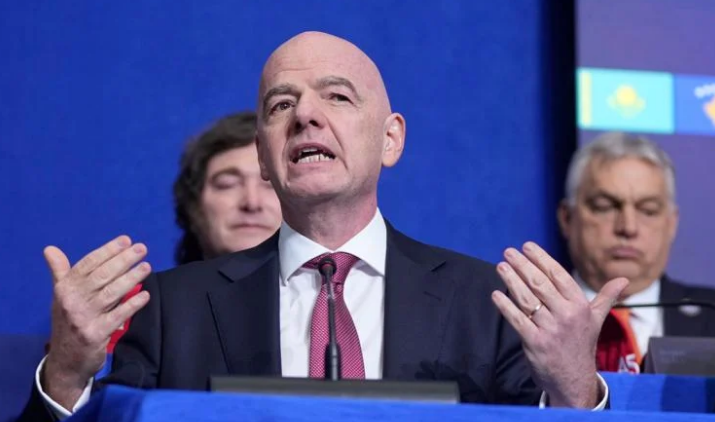
Introduction to FIFA’s Announcement
FIFA has officially confirmed its confidence in Mexico’s preparations for the upcoming World Cup 2026, marking a significant moment in the nation’s involvement in international football. As one of the hosts for this prestigious tournament, Mexico stands to showcase not only its rich football heritage but also its capability to stage a global event of this magnitude. The FIFA statement emphasizes Mexico’s readiness, referencing both logistical arrangements and infrastructure developments necessary to host millions of fans and significant matches.
This announcement is particularly noteworthy given Mexico’s historical relationship with the World Cup. The country has hosted the tournament twice prior to 2026, in 1970 and 1986, making it the first nation to host the World Cup on three occasions. Each of these tournaments has been met with enthusiasm and has contributed to the country’s proud football culture. By reaffirming Mexico as a credible host, FIFA acknowledges the nation’s long-standing commitment to the sport while also recognizing its ability to provide the necessary tournament security and logistics that such a large-scale event demands.
The excitement building around the World Cup 2026 in Mexico is palpable, as fans and stakeholders alike anticipate a celebration of football that reflects Mexico’s unique character and hospitality. Furthermore, this announcement not only boosts national pride but also has potential economic implications, drawing international attention and tourism to the country in the lead-up to the events. As Mexico continues to prepare infrastructure and security measures, the endorsement from FIFA solidifies its position as a focal point for the tournament, reinforcing the importance of effective planning as the date approaches.
Details of Mexico’s World Cup Preparations
As the world looks forward to the World Cup 2026, Mexico is making significant strides in its preparations to host this global tournament. Recognized as one of the co-host countries, Mexico is currently undertaking comprehensive infrastructure development to ensure that it meets the expectations of players, fans, and FIFA’s strict standards. This includes the enhancement of existing stadiums, the construction of new facilities, and the overall improvement of transportation networks.
Stadium renovations have been a primary focus, with several venues receiving substantial upgrades to meet FIFA’s requirements for hosting international matches. Iconic stadiums, such as Estadio Azteca in Mexico City, are undergoing significant refurbishments to enhance seating, accessibility, and technological integration. These upgrades not only reflect Mexico’s commitment to providing exceptional experiences for attendees but also aim to enhance safety and tournament security, which have increasingly become a priority in light of recent global events.
In addition to stadium enhancements, logistical planning plays a crucial role in hosting the World Cup 2026. Mexico’s National Sports Commission is collaborating with local governments to develop effective transportation solutions, including improved public transit systems and infrastructure to facilitate the influx of visitors from around the world. This includes planning for traffic management and ensuring that fans can smoothly navigate between host cities.
Furthermore, the preparations align with FIFA’s requirements as the organization emphasizes the importance of a cohesive and well-coordinated approach among the host nations. The Mexican government’s commitment to tournament security is evident, as discussions and planning sessions take place to guarantee the safety of all participants and attendees during the World Cup. As these efforts progress, Mexico remains confident in its capability to deliver a memorable and successful World Cup experience.
Analysis of Mexico’s Football Confidence
The anticipation surrounding the world cup 2026 is palpable, particularly with Mexico in the spotlight as a key host nation. The current state of Mexican football demonstrates not only a solid foundation but also an encouraging trajectory toward the tournament. Mexico’s national team, often referred to as “El Tri,” has shown competitive performance in international competitions, notably in the FIFA World Cup and CONCACAF tournaments. Recent qualifiers and friendly matches indicate a growing resilience and adaptability in response to global challenges.
In addition, the development of local talent has become a priority for Mexican football organizations. Youth academies and training programs have gained momentum, contributing to a pipeline of proficient players capable of performing at the highest levels. Observers have noted that this investment in grassroots football reflects a strategic vision that aligns with FIFA’s expectations for enhancing standards in host nations. This surge in talent also fuels the national team’s ambition to gain a competitive edge in the world cup 2026.
The enthusiasm among fans and stakeholders further reinforces the positive outlook for Mexican football. The nation’s passion for the sport translates into robust support for both club and national teams, ensuring that the atmosphere during the world cup 2026 will be vibrant and welcoming. Local engagement, combined with international attention, positions Mexico as a confident player in the tournament hosting landscape. Moreover, FIFA’s statement expressing confidence in Mexico is indicative of its hard work and preparations towards ensuring tournament security and operational efficiency for the world cup 2026.
Both grassroots and professional dimensions of football in Mexico showcase the country’s readiness to embrace this global event. The collective enthusiasm and strategic investments serve as a testament to Mexico’s commitment to not only host the tournament effectively but also celebrate the spirit of the game on an international stage.
Implications for the Future of Mexican Football
The affirmation by FIFA regarding the involvement of Mexico as a host for the World Cup 2026 holds significant implications for the future of football in the country. This confidence not only underscores Mexico’s capabilities to organize a prestigious international tournament but also enhances its potential standing in global football. With such recognition, the Mexican Football Federation (FMF) might find increased investment opportunities to further develop the sport within its borders.
This major tournament presents an opportunity to enhance grassroots development, with the hope of invigorating local leagues and youth football programs. As FIFA emphasizes tournament security and the smooth running of events, the groundwork laid in preparation will likely strengthen the overall football infrastructure, including coaching, facilities, and youth engagement. A successful World Cup can catalyze a surge in interest in football, inspiring the next generation of players and fans alike.
Moreover, Mexico’s role as a host can influence international relations in sports, especially with neighboring countries. A well-executed event can foster collaboration among North American nations, potentially resulting in more joint initiatives in sports beyond football. Such partnerships could also ease collaborative efforts in bids for future events, ensuring sustainable development and promoting Mexican football on both local and international stages.
Additionally, the experience gained in hosting the World Cup will prepare Mexico for future bids, perhaps positioning it as a frontrunner for upcoming tournaments. The FIFA statement regarding event readiness indicates that Mexico is not only a viable host now but may become a preferred choice for future international competitions.
In conclusion, the confidence expressed by FIFA in Mexico for World Cup 2026 signifies a pivotal moment for Mexican football, with numerous beneficial implications that extend far beyond the tournament itself.