

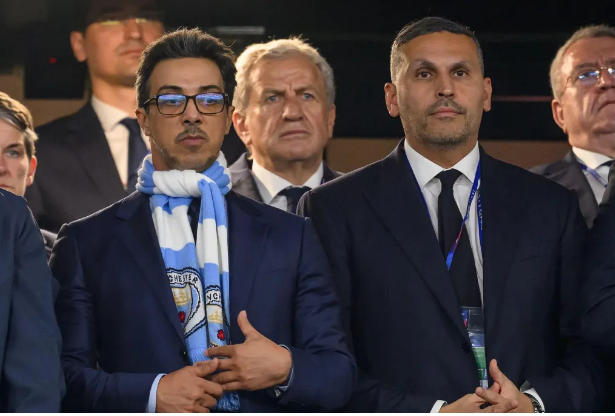
The Manchester City verdict should be understood within the specific legal and regulatory framework in which it was issued. Its findings concern the relevant legal entity, the evidence presented, and the rules governing the dispute; they do not automatically establish conclusions about every company connected to the club, its ultimate ownership arrangements, or the conduct of the UAE state. That distinction is essential when assessing the implications for Abu Dhabi investment and international business relationships.
Even so, a decision involving one of football’s most prominent clubs can carry significance well beyond the immediate parties. Manchester City’s profile has made its ownership structure, financing, and commercial relationships subjects of sustained public attention. Consequently, the Premier League verdict may influence how supporters, policymakers, investors, and journalists discuss state-backed capital, disclosure standards, and the independence of sporting governance. Public interpretation may extend further than the legal text, particularly where questions of accountability and influence are already contested.
The debate also requires careful separation between UAE-linked investment, Abu Dhabi-based entities, and the UAE government itself. A relationship with an investment vehicle or corporate group does not necessarily demonstrate direction by the state, just as a regulatory finding against a legal entity does not by itself constitute a judgment on an entire national economy. Maintaining these distinctions helps prevent a club-specific ruling from being treated as a blanket assessment of the UAE’s commercial institutions or investment practices.
Nevertheless, the case may increase scrutiny of investment standards across sectors. Regulators and business partners could place greater emphasis on beneficial ownership, related-party transactions, source-of-funds information, governance controls, and the consistency of compliance procedures. For UAE investors, the reputational risk may arise not only from legal liability but also from uncertainty, incomplete disclosure, or the perception that oversight is uneven. The question for the wider market is therefore how transparently institutions respond: by clarifying structures, strengthening independent review, and demonstrating that commercial ambition is matched by credible governance. In that sense, the controversy surrounding Man City ownership may become a broader test of confidence in UAE international investment, without proving claims that the verdict itself does not make.
Football club ownership is no longer viewed solely as a commercial transaction. A globally recognised team can function as an international brand, connecting its investors with audiences, businesses, and institutions across multiple markets. For UAE-linked investors, ownership may support national branding by associating economic ambition with sporting excellence, while also strengthening tourism promotion and the visibility of cities seeking to attract visitors, conferences, and major events. The profile of man city ownership illustrates how a club can become part of a wider strategic narrative rather than remaining an isolated sports asset.
Such investments can also contribute to soft power. Regular exposure through international broadcasts, digital media, and overseas tours creates opportunities to present a country as modern, globally engaged, and commercially open. An Abu Dhabi investment in elite sport may generate commercial partnerships, expand networks with sponsors and broadcasters, and provide access to international markets. The resulting relationships can complement economic-diversification goals by encouraging activity in media, hospitality, retail, technology, and professional services.
However, the same visibility that makes football attractive also increases exposure to scrutiny. Supporters may question the motives and values associated with ownership, while journalists and campaigners examine the links between clubs, governments, public institutions, and corporate entities. Human-rights organisations can use the global platform of football to raise concerns that might receive less attention elsewhere. Rival clubs may also challenge investment structures or perceived competitive advantages, particularly when financial regulation and sporting integrity are involved.
These tensions make the UAE Manchester City relationship a useful example of the opportunities and vulnerabilities surrounding strategic sports investment. Commercial success, global recognition, and diplomatic access can deliver substantial benefits, but legal disputes can expose weaknesses in governance, transparency, and reputation management. A Premier League verdict therefore carries implications beyond points, penalties, or balance sheets: it can influence investor credibility, stakeholder trust, and the broader argument that football ownership serves national economic and diplomatic objectives.
Concerns surrounding the Premier League verdict could create additional scrutiny for future UAE-linked investment, although the scale of any effect would depend on the findings, subsequent appeals, and the response of regulators, clubs, and commercial partners. A central consequence could be stricter due diligence. Investors connected to Abu Dhabi or other state-linked institutions may face more detailed checks on ownership structures, sources of funds, governance arrangements, and the independence of decision-makers.
Authorities and counterparties could also increase monitoring of sponsorship agreements, related-party transactions, and financial arrangements between clubs, investors, and affiliated companies. Enhanced ownership checks might lengthen negotiations and raise compliance costs. The possibility of litigation is another risk, particularly if parties claim that representations, contractual obligations, or regulatory disclosures were incomplete. Even without a successful legal claim, prolonged proceedings could delay transactions and make commercial partners more cautious.
Reputational damage and intensified political criticism could affect projects beyond UAE Manchester City-related discussions. Negotiations involving football, entertainment, infrastructure, real estate, and technology may attract greater media attention, parliamentary scrutiny, or pressure from campaign groups. Some counterparties could seek additional warranties, termination rights, or public-distance measures before proceeding with an Abu Dhabi investment.
One scenario is a contained dispute in which legal clarification limits market consequences and negotiations continue with modest adjustments. A second is a prolonged regulatory backlash that makes sports investments more difficult while leaving other sectors largely unaffected. A wider reassessment of state-linked capital could extend scrutiny across multiple industries and jurisdictions. These are potential risks, not confirmed outcomes. Their scale would depend on the verdict’s legal significance, appeal results, regulatory coordination, transparency of ownership, quality of compliance reforms, investor communication, and whether future transactions can demonstrate genuine commercial independence. Under that scenario, Man City ownership would remain a specific case rather than a definitive test of every UAE-linked investment.
For UAE-linked investors, the most effective response is to treat credibility as a governance issue rather than a communications exercise. Stronger internal controls should establish clear approval procedures for sponsorships, related-party transactions, financial reporting and regulatory submissions. Independent directors, external audits and compliance committees can provide meaningful challenge to executive decisions, particularly where commercial interests overlap with public institutions or politically connected stakeholders. Transparent ownership disclosures should identify ultimate beneficial owners, funding arrangements and decision-making rights in language that regulators, supporters and business partners can readily understand.
Clear separation between commercial entities and government bodies is equally important. An investment vehicle may have UAE connections without being directly controlled by the state, but that distinction must be supported by documented governance arrangements, not simply asserted. Rigorous anti-money-laundering, sanctions, competition and financial fair-play systems can reduce uncertainty, while timely communication during disputes can prevent speculation from filling an information vacuum. In cases involving Abu Dhabi investment or questions about Man City ownership, early publication of relevant evidence and an explanation of the review process would help protect confidence without compromising legal rights.
Clubs, leagues and regulators also have responsibilities. Financial rules should be applied consistently across ownership structures, jurisdictions and levels of commercial influence. Requirements must be sufficiently precise to distinguish legitimate sponsorship from disguised capital support, while allowing investors a fair opportunity to respond. Accessible evidence, reasoned decisions and independent appeal mechanisms are essential if a Premier League verdict is to command lasting authority. Regulators should also coordinate across borders, since ownership, financing and sponsorship arrangements often involve several legal systems.
Handled well, the episode need not define UAE Manchester City relations or wider sovereign investment in sport. It could instead encourage clearer standards for state-connected capital, stronger institutional independence and more reliable disclosure. Whether the controversy remains a temporary reputational setback or becomes a catalyst for reform will depend less on public statements than on verifiable governance practices adopted by investors, clubs and regulators alike.